Restorative Dentistry
Fixed, natural-looking replacements for missing teeth that restore your bite, your smile, and your confidence without removable appliances.
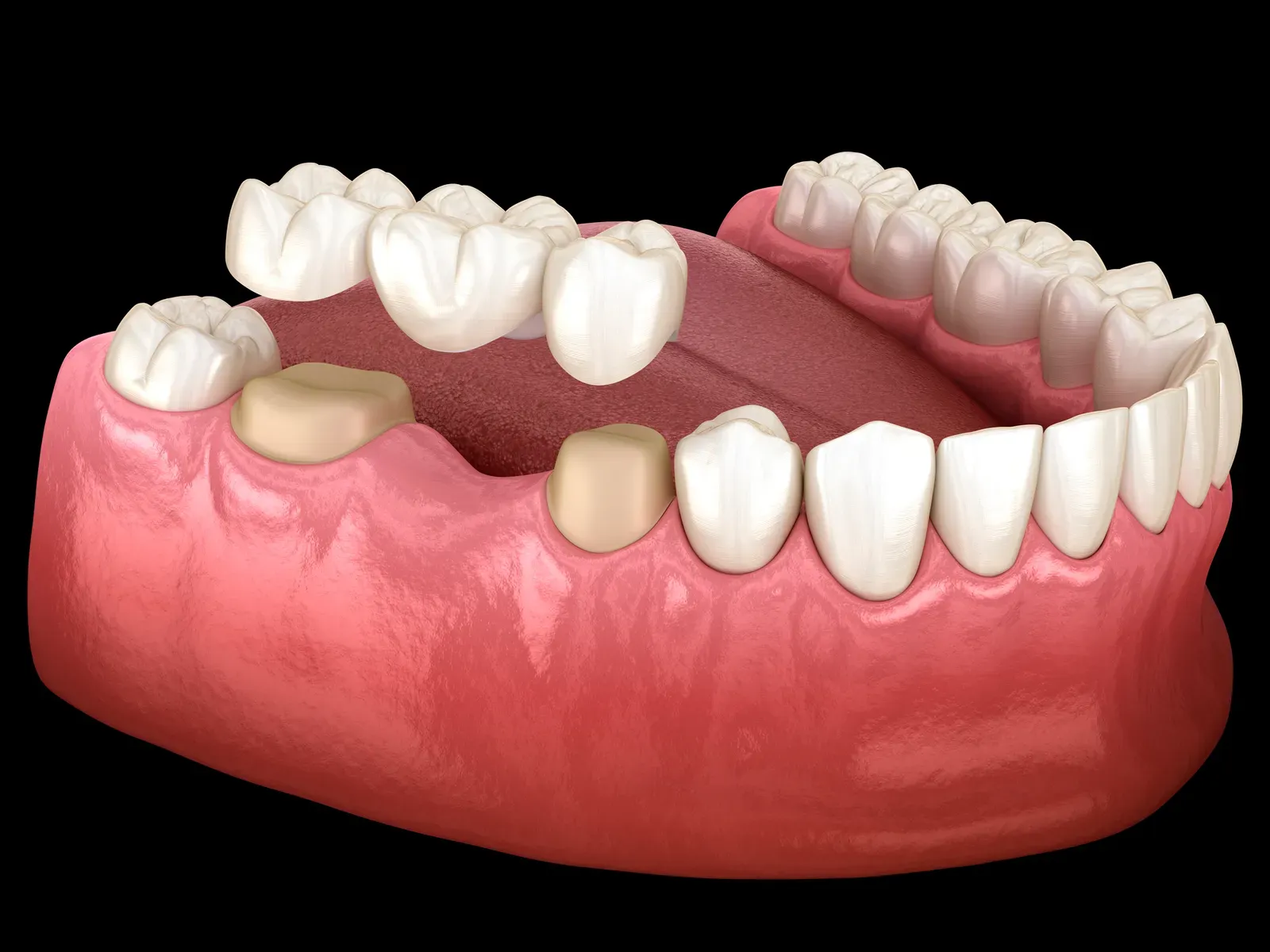
Losing even one tooth changes more than your smile. The teeth on either side of the gap begin to drift, your bite shifts to compensate, and chewing on that side of your mouth becomes awkward or uncomfortable. Over months and years, this drift can lead to uneven wear, jaw strain, and a bite that feels increasingly out of balance. A dental bridge addresses this directly by filling the gap with a fixed, custom-made restoration that is anchored to the teeth (or implants) on either side, so your bite is supported the way nature intended.
At Premier Dental Studio of Katy, we treat dental bridges as a long-term restorative solution, not a quick cosmetic patch. As part of our broader restorative dentistry program, we take the time to evaluate your bone support, the health of your surrounding teeth, and the forces your bite places on a new restoration before we ever recommend a bridge. That groundwork is what allows our bridges to feel stable, chew comfortably, and last for years rather than needing early adjustment or replacement.
We also understand that missing teeth can affect how confident you feel speaking or smiling in front of others. Our goal with every bridge we design is a result that looks indistinguishable from your natural teeth in color, shape, and translucency, so the only thing people notice is your smile, not your dental work.
Missing teeth don't always cause obvious pain, which is why many patients wait longer than they should before seeking treatment. The signs below are common indicators that a fixed bridge could restore both function and appearance before complications develop.
Every mouth responds to tooth loss differently depending on which tooth is missing and how long the gap has existed. A thorough clinical evaluation lets us confirm whether a bridge, an implant, or another restorative approach will give you the most stable and lasting outcome.
Understanding why a tooth was lost helps us plan a bridge that addresses the underlying situation rather than just filling space. Several factors commonly contribute, and they often overlap.
Deep cavities that reach the nerve or destroy too much tooth structure often make extraction the safest option, leaving a gap that needs replacement.
Periodontal disease breaks down the bone and ligament holding teeth in place, often loosening them beyond saving over time.
A sports injury, fall, or accident can fracture a tooth below the gum line or knock it out entirely, requiring a fixed replacement.
Years of clenching or grinding can crack a tooth or wear it down to the point that it can no longer be restored with a filling or crown.
An old filling, crown, or root canal that eventually fails can leave a tooth too compromised to keep, especially without regular checkups.
Some people are simply born without one or more teeth, leaving a permanent gap that a bridge can close without surgery.
Waiting too long after a tooth is pulled lets neighboring teeth shift, which can complicate bridge placement and require extra preparation.
Every bridge we place follows a careful, methodical sequence designed around your specific mouth and bite. Here's what that process typically looks like from your very first visit.
We start by listening to your concerns, reviewing how the gap is affecting your bite and daily comfort, and discussing whether a traditional, Maryland, or implant-supported bridge fits your situation best.
Digital X-rays and a hands-on exam let us assess the bone and root support of the abutment teeth, check for decay or gum disease, and confirm your bite is healthy enough to carry a bridge long term.
We outline material choice, shade matching, and the exact design of your bridge, then walk you through timing, what to expect at each visit, and how to care for it once it's in place.
We prepare the supporting teeth, take precise impressions, and fit a comfortable temporary bridge while your custom restoration is crafted, then cement the final bridge once it fits and feels right.
We check your bite alignment at a follow-up visit and provide clear guidance on cleaning beneath the bridge so it stays healthy and comfortable for years to come.
A properly designed dental bridge does more than close a gap in your smile. It restores real function and stability that most patients feel almost immediately.
With a stable bridge anchoring your bite, you can chew firm and crunchy foods again without favoring one side of your mouth.
Custom shading and shaping mean your bridge blends with surrounding teeth, so gaps and discoloration are no longer visible when you smile or speak.
Filling the gap keeps neighboring teeth from drifting into the open space, which helps preserve your natural bite alignment.
Replacing missing teeth, especially in the front of the mouth, helps restore clear pronunciation that gaps can otherwise affect.
A balanced bite distributes chewing forces evenly, easing the jaw fatigue and soreness that often comes with compensating for a missing tooth.
Unlike a removable partial, a bridge stays in place permanently and is cared for just like your natural teeth, with brushing, flossing, and regular checkups.
A dental bridge relies on the teeth next to the gap, called abutment teeth, to carry the biting forces of the replacement tooth or teeth in between. If those abutment teeth are weak, decayed, or have insufficient bone support, the entire bridge is at risk of failure regardless of how well the visible portion is crafted. This is why our evaluation process looks closely at the structural condition of every tooth that will support your bridge, not just the gap itself.
When abutment teeth are healthy, they are reshaped to receive crowns that anchor the bridge securely, distributing chewing pressure across a wider area than a single missing tooth ever did on its own. Over years of normal use, this distributed load is what allows a well-fitted bridge to function reliably without placing excessive strain on any one tooth or on the jaw joint.
In cases where the natural teeth bordering the gap aren't strong enough to serve as anchors, we may recommend an implant-supported bridge instead, which transfers the load to the jawbone rather than to adjacent teeth. Determining the right approach up front is one of the main reasons our treatment planning process includes thorough imaging and a detailed bite assessment before any preparation begins.
A dental bridge can last well over a decade with consistent, attentive home care. These habits help protect both the bridge and the natural teeth supporting it.
Use a floss threader or water flosser daily to clear food debris and plaque from under the replacement tooth, where a regular toothbrush can't reach.
Brush the bridge and abutment crowns gently but thoroughly morning and night to prevent plaque buildup along the gumline.
Hard, unforgiving foods can crack the bridge material or loosen the cement holding the crowns in place over time.
If you clench or grind at night, a custom nightguard protects your bridge from excessive, repetitive force.
Professional cleanings every six months remove buildup around the bridge margins that home brushing alone can miss.
If your bridge ever feels loose, shifts, or causes new discomfort, call us promptly so we can check and recement it before it fails.
These habits go a long way toward protecting your investment, but they work alongside professional checkups rather than replacing them. Regular visits let us catch small issues with the bridge or supporting teeth long before they become bigger problems.
"We never rush a bridge case. Getting the fit, bite, and shade right the first time is what keeps patients comfortable and confident for years, not just months."
Answers to the questions we hear most often from patients considering a dental bridge at our Cinco Ranch area practice.
Schedule your visit today and experience boutique, personalized dental care designed around you.

 6940 Katy-Gaston Rd Ste 200, Katy, TX 77494
 (281) 271-5100
