Invisalign Services
Clear guidance from our Cinco Ranch dental team on which straightening path fits your lifestyle, timeline, and smile goals.
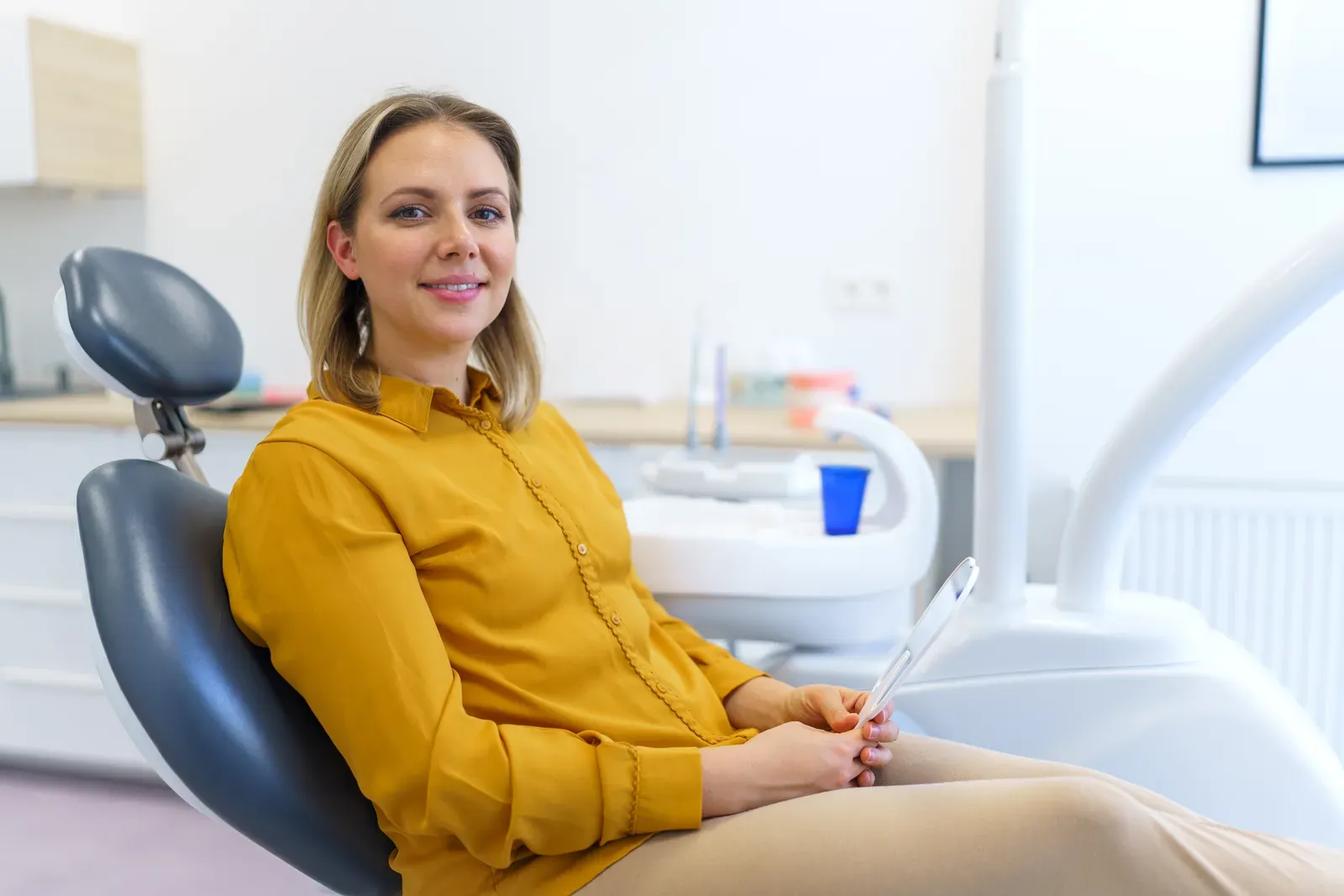
Deciding between Invisalign® and traditional fixed braces is one of the most common questions we hear from patients at Premier Dental Studio of Katy. Both approaches move teeth into healthier, more attractive positions, but they do it in very different ways, and the right choice depends on your bite, your daily routine, and how you want your treatment to fit into your life in Cinco Ranch. Crowded teeth, gaps, overbites, and misaligned jaws don't just affect how your smile looks in photos; they can make chewing uneven, strain your jaw joints, and make certain spots harder to keep clean, which raises your risk of cavities and gum irritation over time.
As a parent service under our broader Invisalign program, this comparison page exists to help you walk into your consultation already informed. We examine your bite pattern, the complexity of your misalignment, your oral hygiene habits, and your personal preferences before recommending a direction. Some cases respond beautifully to clear aligners; others, particularly those involving significant rotation or vertical bite correction, still achieve the most predictable results with fixed brackets and wires.
Our philosophy is simple: we don't push one system because it is trendy or because it is familiar. We look at your specific teeth, talk through your goals, and build a plan around what will actually get you to a stable, healthy, confident bite in the shortest reasonable time frame.
Misalignment shows up differently from patient to patient. Some of our Cinco Ranch patients notice it right away in the mirror, while others only discover a bite problem once we point it out during a routine exam. Here are the clinical signs we look for when evaluating whether Invisalign or fixed braces are the better fit:
Any one of these signs on its own might seem minor, but left unaddressed they tend to compound, leading to more significant bite problems, faster enamel wear, and sometimes gum recession. A thorough professional evaluation lets us catch these issues early and recommend the straightening method that resolves them most efficiently.
Several clinical and lifestyle factors work together to point toward Invisalign or fixed braces. We weigh each of these carefully during your consultation rather than assuming one treatment suits every patient.
Mild to moderate crowding and spacing usually respond well to clear aligners, while severe rotations, significant overbites, or complex bite corrections often require the precise control of fixed brackets and wires.
Patients in client-facing careers or who play wind instruments often prefer the near-invisible appearance of Invisalign, while active teens in contact sports sometimes do fine with braces under a mouthguard.
Invisalign treatment for straightforward cases can sometimes finish faster than comparable braces cases, though complex corrections may take a similar amount of time with either method.
Invisalign aligners are removable, which makes brushing and flossing easier, but they require the discipline to wear them 20 to 22 hours a day. Braces stay in place regardless of patient compliance.
Younger teens who may lose or forget aligners sometimes do better with fixed braces, while responsible teens and adults often prefer the flexibility and discretion of Invisalign.
Both options are often covered similarly by orthodontic insurance benefits, and we walk you through financing so cost doesn't become the deciding factor alone.
Some patients dislike the feel of brackets and wires on the inside of their cheeks, while others find swapping aligner trays every week to feel more disruptive to their routine.
Whichever direction you choose, our process is built around precision, clear communication, and steady progress checks so you always know where you stand in treatment.
We start by listening to your concerns and smile goals, discussing your daily routine, and answering your questions about how Invisalign and braces each work in practice.
Digital X-rays, 3D scans, and a full bite analysis let us measure exactly how much movement is needed and identify which system will achieve it most reliably.
We present our recommendation along with a clear timeline, estimated number of aligners or wire adjustments, and a cost breakdown so you can decide with full confidence.
Invisalign patients receive a series of custom aligner trays to switch every one to two weeks, while braces patients have brackets bonded and wires placed with careful attention to comfort.
Regular progress visits let us adjust wires or issue new aligner sets as needed, and once treatment finishes, we fit you for a retainer to protect your results long term.
Straightening your teeth isn't only cosmetic. Whether you choose Invisalign or fixed braces, properly aligned teeth create lasting improvements in how your mouth functions day to day.
Straight teeth with even spacing are far simpler to brush and floss thoroughly, which lowers your risk of cavities and gum disease in the years after treatment ends.
Correcting overbites, underbites, and crossbites distributes chewing force evenly, reducing the uneven wear and jaw strain that can lead to discomfort later.
Patients with bite-related jaw clicking or soreness frequently report noticeably less tension once their teeth meet correctly and their jaw joint is no longer compensating.
A straight, well-aligned smile often changes how comfortable patients feel smiling in photos, during interviews, and in everyday conversation around Cinco Ranch.
Fixed braces apply continuous, controlled pressure through metal or ceramic brackets bonded to each tooth, connected by an archwire that we tighten and reshape at scheduled visits. This system excels at rotating stubborn teeth, closing large gaps, and correcting vertical bite discrepancies because the wire never comes off and keeps working around the clock.
Invisalign moves teeth through a series of custom, digitally designed clear trays, each one shifting your teeth a small, precise amount before you advance to the next tray in the sequence. Because every tray is mapped out in advance using 3D imaging, we can predict and visualize your final result before treatment even begins, which gives patients a clear picture of their outcome from day one.
Both systems rely on the same biological principle: gentle, sustained pressure causes bone to remodel around the tooth root, allowing it to shift into a new position over weeks and months. The difference lies in how that pressure is delivered and how much daily patient responsibility is required to keep the process moving on schedule.
Good habits between appointments keep your treatment on track, whether you're wearing aligners or braces. These simple routines make a meaningful difference in your final results.
Keep Invisalign trays in for 20 to 22 hours daily, removing them only to eat, drink anything besides water, and brush your teeth.
Rinse aligners each time you remove them and brush them gently with a soft toothbrush to prevent cloudiness and buildup.
Braces patients should steer clear of caramel, popcorn, and ice to protect brackets and wires from breaking loose.
Keep wax on hand to cover any bracket or wire that irritates your cheek until your next adjustment visit.
Use a floss threader or water flosser around brackets, and brush aligners and natural teeth after every meal.
Regular check-ins let us catch small issues early and keep your treatment timeline accurate and on pace.
These habits support the progress we map out together, but they are not a substitute for professional monitoring. Always bring concerns about discomfort, loose brackets, or ill-fitting trays to our team right away.
"We never tell a patient which option to choose before we've actually looked at their bite. Our job is to lay out the real trade-offs clearly so you walk away feeling good about your decision, not rushed into it."
Answers to the questions Cinco Ranch patients ask most often when weighing clear aligners against traditional braces.
Schedule your visit today and experience boutique, personalized dental care designed around you.

 6940 Katy-Gaston Rd Ste 200, Katy, TX 77494
 (281) 271-5100
