General Dentistry
Protecting your gums and the teeth they support with precise diagnosis, gentle deep cleanings, and long-term periodontal maintenance built around you.
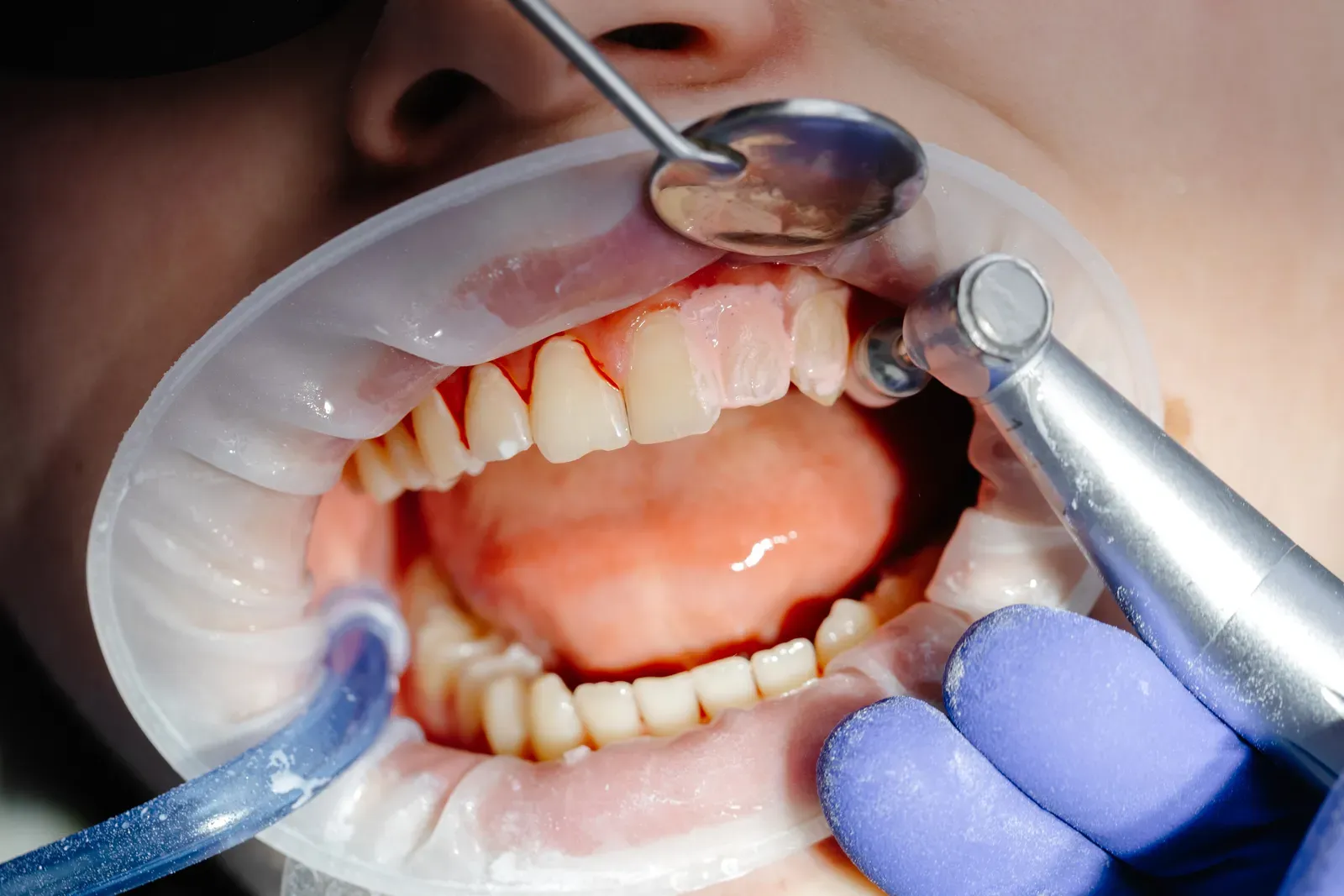
Your gums do more work than most people realize. They form a tight seal around every tooth, hold the underlying bone in place, and act as the first line of defense against the bacteria that live in your mouth every day. When that seal breaks down, usually quietly and without much pain at first, the infection that follows is what we call periodontal disease. It starts as simple gum inflammation and, left untreated, can progress to the point where the bone anchoring your teeth begins to disappear.
Most patients we see in Cinco Ranch do not come in because their gums hurt. They come in because they noticed blood on their toothbrush, a tooth that suddenly feels a little loose, or breath that will not go away no matter how often they brush. These are not cosmetic annoyances. They are signals that bacteria have moved below the gumline and are actively breaking down the tissue and bone that keep your teeth stable, affecting how comfortably you chew, how confidently you smile, and even how well you sleep if an active infection is present.
At Premier Dental Studio of Katy, we treat periodontal disease as the serious, progressive condition it is, not a one-time cleaning problem. Our approach starts with a precise diagnosis using measured pocket depths and digital imaging, followed by a treatment plan built specifically around how far the disease has advanced in your mouth. The goal is always the same: stop the infection, stabilize what remains, and protect your natural teeth for the long run.
Periodontal disease develops gradually, and the early stage, gingivitis, often produces symptoms so mild that patients assume they are normal. Because the condition does not always hurt until it has advanced, it helps to know exactly what to watch for between dental visits.
Because periodontal disease rarely announces itself with real pain until it is advanced, a thorough professional evaluation, including pocket depth measurements and X-rays, is the only reliable way to catch it early and prevent the kind of bone loss that becomes much harder to reverse.
Periodontal disease is rarely caused by a single factor. More often, several things compound each other over time, which is why two patients with similar brushing habits can experience very different outcomes.
Soft plaque that is not removed daily hardens into tartar within days, creating a rough surface that traps even more bacteria below the gumline and accelerates inflammation.
Tobacco restricts blood flow to gum tissue, masking bleeding symptoms while actively slowing healing, making smokers far more likely to develop severe, fast-progressing periodontal disease.
Elevated blood sugar weakens the body's ability to fight infection and impairs healing, creating a two-way relationship where gum disease and diabetes often worsen one another.
Some patients are genetically predisposed to a stronger inflammatory response to the same bacteria, which is why gum disease can run noticeably in families regardless of hygiene habits.
Some prescriptions reduce saliva flow or cause gum tissue overgrowth, both of which make it easier for bacteria to accumulate and harder to keep gums clean at home.
Pregnancy, menopause, and other hormonal shifts can make gum tissue more sensitive and reactive to plaque, increasing the risk of inflammation even with consistent brushing.
Crowded or overlapping teeth create tight spaces that are difficult to clean thoroughly, giving plaque a place to hide and build up undisturbed over time.
A diet low in vitamin C and other key nutrients weakens the body's natural ability to repair gum tissue, slowing recovery even when oral hygiene habits are reasonably good.
No two cases of periodontal disease are identical, so your treatment plan is built around your specific pocket depths, bone levels, and overall health history, not a generic protocol applied to every patient.
We start by listening. You will walk us through your symptoms, your dental history, and any health conditions like diabetes that can influence gum healing, so nothing important gets missed.
We measure pocket depths around every tooth, assess gum recession, and take digital X-rays to see exactly how much bone support remains, giving us a precise map of disease severity.
Based on your findings, we recommend the right level of care, from scaling and root planing to more advanced periodontal therapy, and walk you through exactly what to expect at each stage.
Deep cleaning below the gumline removes bacterial deposits and smooths root surfaces so gum tissue can reattach. We use local anesthetic as needed to keep treatment comfortable throughout.
Periodontal disease requires maintenance, not a single fix. We schedule periodontal maintenance cleanings at shorter intervals and monitor pocket depths to keep the infection from returning.
Treating periodontal disease is about far more than stopping bleeding gums. It is about preserving the bone and tissue that hold your natural teeth in place for years to come.
Removing infection below the gumline halts further bone loss, protecting the foundation that keeps your teeth firmly in place for the long term.
Most patients notice firmer, pinker, less tender gums within weeks of treatment, making brushing and flossing comfortable again instead of something to avoid.
Eliminating the bacterial source of chronic odor gives you breath confidence that mouthwash alone was never able to provide.
Stopping active infection reduces mobility risk, helping your bite stay stable and your natural teeth stay where they belong.
Chronic gum infection has been linked to heart health and blood sugar control, so treating it supports more than just your smile.
Healthy, firm gum tissue frames your teeth naturally, giving you one less thing to think about when you laugh, speak, or smile in photos.
A toothbrush and floss can only reach about three millimeters below the gumline, which is fine for healthy gums but not nearly deep enough once periodontal pockets have formed. As bacteria colonize these deeper spaces, they harden into tartar that is physically impossible to remove at home no matter how diligent you are, which is why gum disease rarely improves without professional intervention.
Scaling and root planing, the core non-surgical treatment for periodontal disease, uses specialized instruments to clean beneath the gumline and smooth the tooth root itself. A smooth root surface is harder for bacteria to grip, and it gives inflamed gum tissue the opportunity to reattach snugly against the tooth instead of staying pulled away and inflamed.
The result over the following weeks is measurable: pocket depths shrink, bleeding decreases, and the bone that remains is given a real chance to stabilize rather than continue eroding. This is why we re-measure pocket depths at follow-up visits, so you can see tangible proof that treatment is working rather than taking it on faith.
Professional treatment does the heavy lifting, but consistent daily habits make the difference between lasting results and a relapse.
Angling your brush toward the gumline helps dislodge plaque from the exact area where periodontal disease begins.
Flossing reaches the tight spaces between teeth that brushing alone misses, cutting down on bacteria your toothbrush cannot touch.
A rinse recommended by our team can help reduce bacterial load between cleanings, especially during active treatment.
Cutting back on smoking measurably improves gum healing response and lowers your risk of future bone loss.
Periodontal maintenance cleanings every three to four months keep pocket depths from creeping back up over time.
If you have diabetes, keeping blood sugar well controlled gives your gum tissue a much better chance to heal and stay healthy.
These habits are genuinely effective support, but they work alongside professional care, not in place of it. Only a periodontal exam can tell you whether your gum pockets are actually healing or quietly deepening.
"We never want a patient to feel embarrassed about gum disease. It is one of the most common conditions we treat, and with the right plan, most patients see real, measurable improvement within their first few visits."
Common questions our Cinco Ranch patients ask about diagnosing and treating periodontal disease.
Schedule your visit today and experience boutique, personalized dental care designed around you.

 6940 Katy-Gaston Rd Ste 200, Katy, TX 77494
 (281) 271-5100
