Restorative Dentistry
Tooth-colored, mercury-free fillings that blend seamlessly with your smile while repairing decay and restoring everyday bite strength.
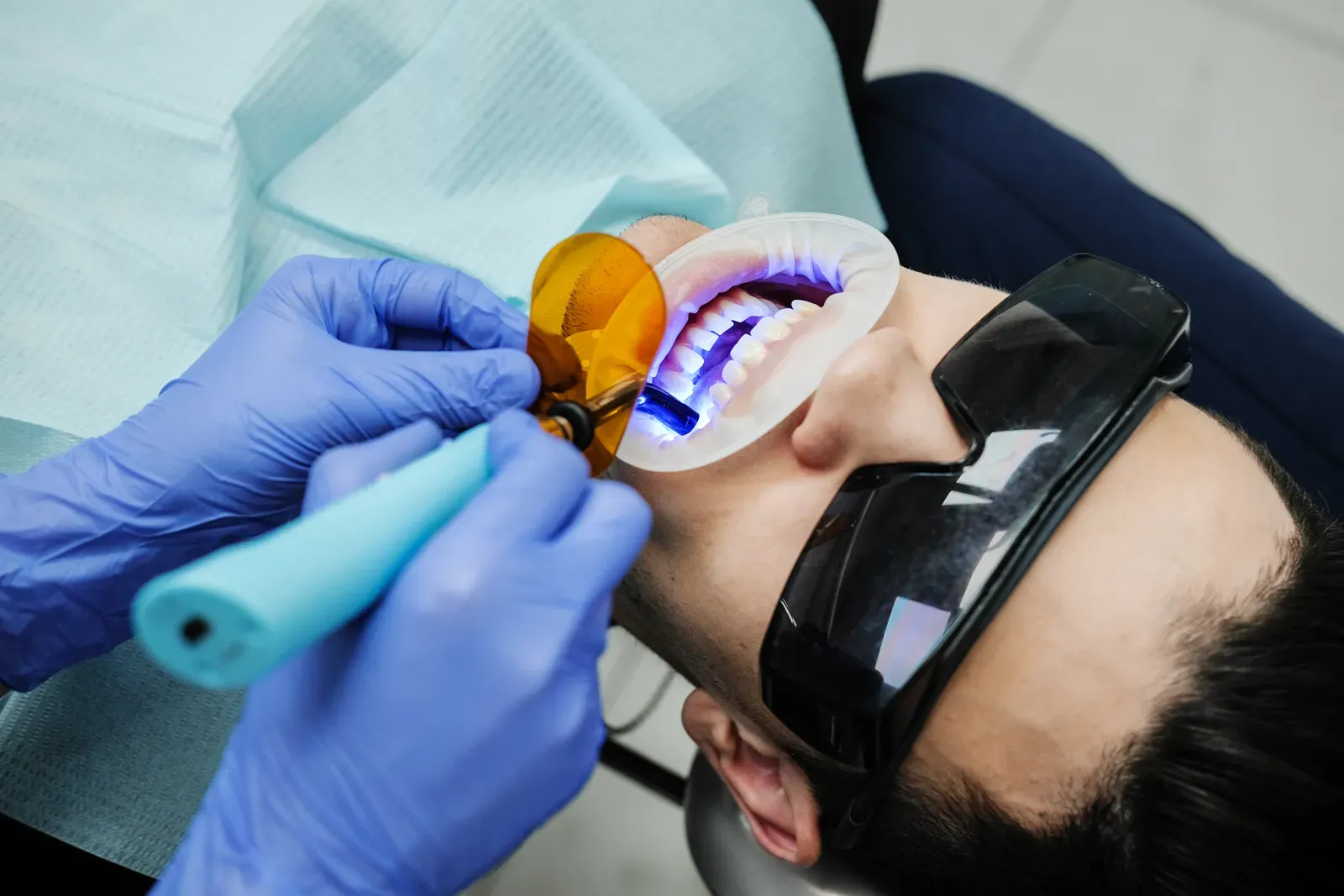
A cavity rarely announces itself gently. It often starts as a faint twinge with cold water or a catch when you floss, and left alone, that small area of decay works its way deeper into the tooth. Composite fillings give us a way to stop that process early, removing the compromised tissue and rebuilding the tooth with a tooth-colored material that bonds directly to your natural enamel and dentin.
Unlike the dark amalgam fillings many of us grew up with, composite resin is shaded to match your surrounding teeth, so repaired teeth stay blended into your smile rather than standing out when you laugh or talk. The material also bonds chemically to the tooth, which means our dentists can often preserve more of your healthy structure than older filling techniques required, since composite does not depend on mechanical undercuts the way metal fillings do.
At Premier Dental Studio of Katy, we treat every filling as part of your long-term restorative plan, not just a quick patch. We take the time to evaluate the full extent of decay with digital X-rays, match the composite shade precisely to your tooth, and sculpt the restoration so your bite feels natural the moment you leave our chair. Most composite fillings are completed comfortably in a single visit, letting Cinco Ranch families get back to normal eating and daily life the same day.
Tooth decay progresses at different speeds depending on diet, saliva flow, and oral hygiene habits, so symptoms can show up suddenly or build gradually over months. Recognizing these early warning signs helps you get treatment before a simple filling turns into a more involved procedure.
Even subtle symptoms deserve a professional look. Decay that feels minor on the surface can already extend much deeper, and a timely exam allows us to treat the tooth conservatively with a filling instead of a more extensive procedure like a crown or root canal.
Tooth decay is rarely caused by a single factor. It usually develops from a combination of everyday habits and biological conditions working together over time, which is why prevention and early treatment both matter so much.
Bacteria in plaque feed on sugars and starches, producing acid that erodes enamel. Frequent snacking or sipping sugary drinks throughout the day keeps your teeth under near-constant acid attack.
Saliva naturally rinses away food debris and neutralizes acid. Dry mouth caused by certain medications, dehydration, or breathing patterns leaves teeth more vulnerable to decay.
Plaque that is not removed regularly hardens and continues producing acid against the enamel surface. Missed spots between teeth are especially prone to developing hidden decay.
Back teeth naturally have pits and fissures that trap food and bacteria more easily than flat surfaces, making them a common starting point for decay, especially without sealants.
Older fillings can wear down, crack, or separate slightly from the tooth over the years, creating microscopic gaps where new decay quietly takes hold underneath the surface.
Citrus fruits, sports drinks, and carbonated sodas soften enamel directly through acid exposure, making teeth more susceptible to decay even without added sugar present.
Every composite filling we place follows a careful, methodical process designed to keep you comfortable and ensure the restoration lasts for years to come.
We start by listening to your symptoms and concerns, then take digital X-rays to see decay that isn't visible to the naked eye, including between teeth and below old restorations.
Our dentist examines the affected tooth closely, checks your bite, and determines the exact depth and extent of decay to confirm a composite filling is the right, conservative solution.
We select a composite resin shade that blends with your natural tooth color and walk you through exactly what to expect, including numbing options and estimated appointment length.
After numbing the area comfortably, we remove only the decayed tissue, clean the site, and bond the composite resin in thin layers, hardening each with a curing light before shaping it to your bite.
We polish the restoration for a smooth, natural finish, check your bite alignment one more time, and remain available for any adjustment or sensitivity you notice once the numbness wears off.
A properly placed composite filling does more than stop pain for a few weeks. It restores the tooth's strength, appearance, and function so you can rely on it for everyday life.
Because the resin is shade-matched to your tooth, the repair stays invisible in conversation and photos, unlike older silver-colored fillings.
Composite bonds directly to enamel and dentin, which means we remove less healthy tooth than older filling methods required, keeping the tooth stronger overall.
Once the decayed tissue is removed and the tooth is sealed, the sharp reaction to hot, cold, or sweets typically resolves, letting you eat and drink comfortably again.
Composite resin contains no mercury or metal, which many of our Cinco Ranch patients prefer, particularly for fillings on front and visible teeth.
A well-contoured filling restores the tooth's original shape so your bite distributes force evenly again, reducing strain on neighboring teeth and the jaw joint.
Most composite fillings are done start to finish in one appointment, so you leave with a repaired, functional tooth the same day without a lab fabrication delay.
Decay does not stay contained to the surface. Once bacteria break through enamel, they work through dentin far more quickly because that inner layer is softer and offers less resistance. A cavity that would take a year to form through enamel can spread through dentin in a fraction of that time, which is why a small spot you notice today can become a far larger problem in just a few months.
As decay deepens, it moves closer to the pulp chamber where the tooth's nerve and blood supply live. At that point, a simple filling is no longer enough, and treatment often shifts to a root canal or even extraction. Treating decay while it is still confined to enamel or the outer dentin layer allows us to use a conservative composite filling instead of a more invasive, more expensive procedure.
This is also why we recommend routine checkups every six months rather than waiting until a tooth hurts. Many cavities produce no pain at all in their early stages, and digital X-rays catch decay between teeth long before it would ever be visible or felt. Early intervention keeps your treatment simpler, your appointment shorter, and your out-of-pocket cost lower.
A composite filling can last many years with the right everyday habits. These simple practices help protect both your new restoration and the rest of your smile between visits.
Fluoride strengthens enamel around the filling margins and helps prevent new decay from starting at the edges of the restoration.
Food trapped between teeth near a filling's edge is a common cause of new decay forming right next to a previous restoration.
Spacing out meals and snacks gives your saliva time to neutralize acid rather than keeping your teeth under constant attack throughout the day.
Biting ice, pens, or fingernails puts sudden stress on composite material and can chip or fracture an otherwise healthy filling.
Adequate water intake supports healthy saliva flow, which naturally rinses food particles and buffers acid away from your teeth.
Regular visits let us catch wear or early decay around an existing filling well before it becomes a bigger, more costly repair.
These habits go a long way toward protecting your investment, but they are not a substitute for professional care. If you notice sensitivity, a rough edge, or discomfort around a filling, schedule an exam so we can address it before it progresses.
"We never want a patient to feel rushed or anxious in the chair. Every composite filling we place is done with patience, a steady hand, and a real explanation of what we're doing and why, so you leave understanding your own care."
Answers to common questions our Cinco Ranch patients ask about composite fillings and cavity treatment.
Schedule your visit today and experience boutique, personalized dental care designed around you.

 6940 Katy-Gaston Rd Ste 200, Katy, TX 77494
 (281) 271-5100
