Invisalign
Straight answers about clear aligner treatment from the doctors Cinco Ranch families trust for straighter, healthier smiles.
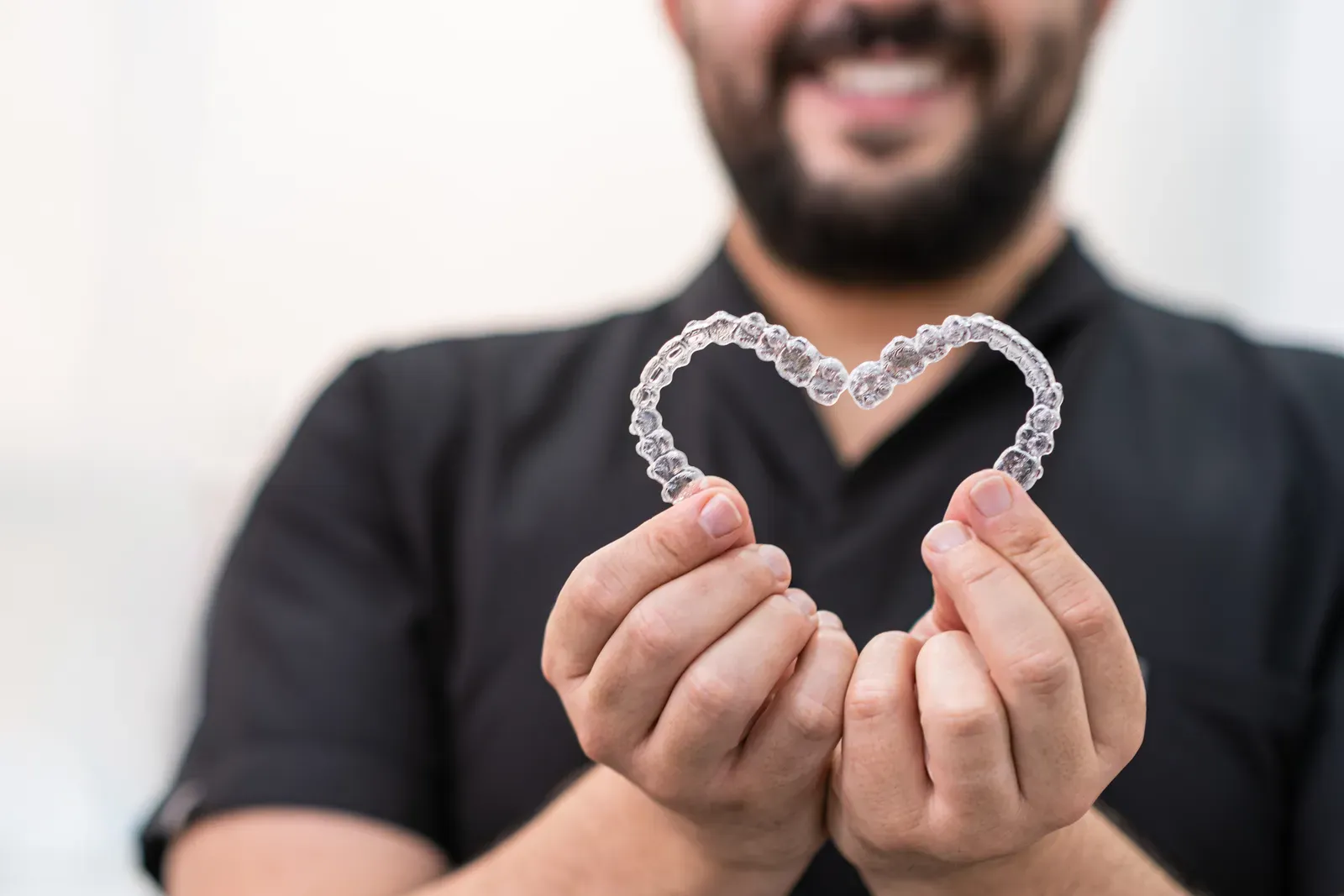
Deciding to straighten your teeth as an adult or teen brings up a lot of practical questions, and that's exactly why this page exists. Patients across Cinco Ranch come to Premier Dental Studio of Katy with the same core concerns: how long treatment actually takes, whether it hurts, what it costs, and whether clear aligners can really fix their specific bite. We've gathered the honest, detailed answers here so you can walk into your consultation already informed.
Invisalign uses a series of custom-fabricated clear aligner trays that gradually shift teeth into proper alignment without the brackets and wires of traditional braces. For many adults balancing careers, parenting, and social commitments, the appeal is obvious - the trays are removable, nearly invisible, and far easier to keep clean around. But the treatment still requires precise digital planning, attentive monitoring, and a dentist who understands how tooth movement actually works biomechanically.
Our approach at Premier Dental Studio of Katy centers on thorough diagnostics before a single aligner is ever ordered. We evaluate your bite, jaw function, gum health, and existing dental work so the treatment plan we build actually matches your mouth, not a generic template. That diagnostic care is what prevents the mid-treatment surprises that frustrate patients at discount aligner clinics.
Not every orthodontic concern looks the same from patient to patient, and candidacy for clear aligners depends on more than just crooked front teeth. These are the signals we hear most often from Cinco Ranch patients who end up being excellent Invisalign candidates.
A thorough clinical exam, complete with digital scans and bite analysis, is the only reliable way to know whether your particular case is straightforward or requires additional planning. Skipping this step is how patients end up with a treatment plan that doesn't fully address their underlying bite.
Two patients with similar-looking smiles can have very different Invisalign journeys. These are the factors that most influence how your treatment unfolds, and why personalized planning matters more than marketing promises.
Mild crowding typically moves faster than complex rotations or significant bite discrepancies, which directly affects your total number of aligner trays and overall timeline.
Aligners need 20 to 22 hours of daily wear to work as planned. Inconsistent wear is the single most common reason treatment extends beyond its original estimate.
Crowns, bridges, and older fillings can affect how aligners fit and how teeth respond to pressure, which is why we review your full dental history before finalizing a plan.
How your upper and lower arches meet influences whether attachments, elastics, or auxiliary tools are added to help guide teeth into a more stable, functional bite.
Healthy supporting tissue allows teeth to move predictably. Active gum disease should be treated first so tooth movement doesn't accelerate bone or attachment loss.
Regular check-ins allow our team to catch tracking issues early, order refinement trays if needed, and keep your treatment on schedule rather than drifting off course.
Every Invisalign plan at Premier Dental Studio of Katy follows a consistent, carefully sequenced process so you always know what to expect next.
We start by listening to your goals, reviewing your dental and medical history, and answering your initial questions about cost, timeline, and expected outcomes.
Digital scans, photos, and X-rays map your bite and tooth positions precisely, giving us the detailed data needed to predict how your teeth will respond to treatment.
We build a digital simulation showing projected tooth movement from start to finish, so you can preview your estimated outcome before committing to the full series of trays.
You'll receive your aligner sets with clear wear instructions, and switch trays on a schedule we set together based on how your teeth are tracking during check-ins.
Once your active treatment ends, we fit you for a retainer and schedule follow-up visits to confirm your bite has stabilized and your new alignment is holding.
A well-executed Invisalign plan delivers more than a straighter smile in photos. It changes how your teeth function day to day, and the benefits tend to compound over time.
Properly aligned teeth distribute chewing forces evenly, reducing uneven wear patterns and easing strain on individual teeth that previously carried more than their share of the load.
Straighter teeth with proper spacing are simpler to floss and brush thoroughly, which lowers your long-term risk of cavities between teeth and gum inflammation along crowded edges.
Patients consistently tell us they smile more freely in photos and conversations once visible gaps or crowding are resolved, which has a genuine effect on social comfort.
With a properly fitted retainer and routine follow-up visits, the alignment you achieve is built to last, protecting the time and investment you put into treatment.
One of the most common questions we field in Cinco Ranch is why some patients get small tooth-colored attachments bonded to their teeth during Invisalign treatment. These composite bumps give the aligner tray something to grip, which allows for more controlled and precise tooth movement, especially rotations or bodily shifts that flat tooth surfaces alone can't achieve reliably.
Tracking, meaning how snugly your current aligner fits against your teeth, is another detail that affects your outcome more than people realize. When a tray doesn't seat fully, it's often a sign that tooth movement is lagging behind the digital plan. We watch for this closely at every visit because catching a tracking issue early, and adding a short "chewie" exercise period or adjusting your schedule, prevents the need for a longer refinement phase later.
This is also why we caution against ordering aligners through mail-order services without an in-person dentist monitoring your progress. Bite mechanics are three-dimensional and dynamic; a plan that looks fine on a screen can diverge from reality quickly without a trained eye checking tooth movement in person every six to eight weeks.
Your daily routine has a bigger impact on your Invisalign timeline than most patients expect. These habits make a real, measurable difference between visits.
Remove aligners only for eating, drinking anything besides water, and brushing. Consistency is the single biggest factor in staying on schedule.
Rinse aligners with lukewarm water and brush gently with a soft toothbrush to prevent buildup, odor, and discoloration over the course of treatment.
Food particles trapped against teeth under a tray for hours can raise cavity risk, so a quick cleaning after meals protects your enamel.
Always use the provided case rather than a napkin or pocket. Lost or warped aligners can delay your entire treatment timeline.
These small foam cylinders help seat new trays fully against your teeth, improving fit and reducing the chance of tracking problems.
Routine visits let our team verify progress against the digital plan and make small adjustments before minor issues become bigger delays.
These habits support a smoother treatment experience, but they work alongside our clinical oversight, not instead of it. Regular professional monitoring remains the real safeguard for a predictable outcome.
"Patients come to us with a list of Invisalign questions they've been Googling for weeks. We'd rather spend real chair time answering them honestly, with your actual scans in front of us, than let you guess."
Answers to the Invisalign questions our Cinco Ranch patients ask most often, from cost and comfort to eating and maintenance.
Schedule your visit today and experience boutique, personalized dental care designed around you.

 6940 Katy-Gaston Rd Ste 200, Katy, TX 77494
 (281) 271-5100
