Orthodontic Care
Straighten your teeth discreetly with custom clear aligners designed around your life, your schedule, and your smile goals.
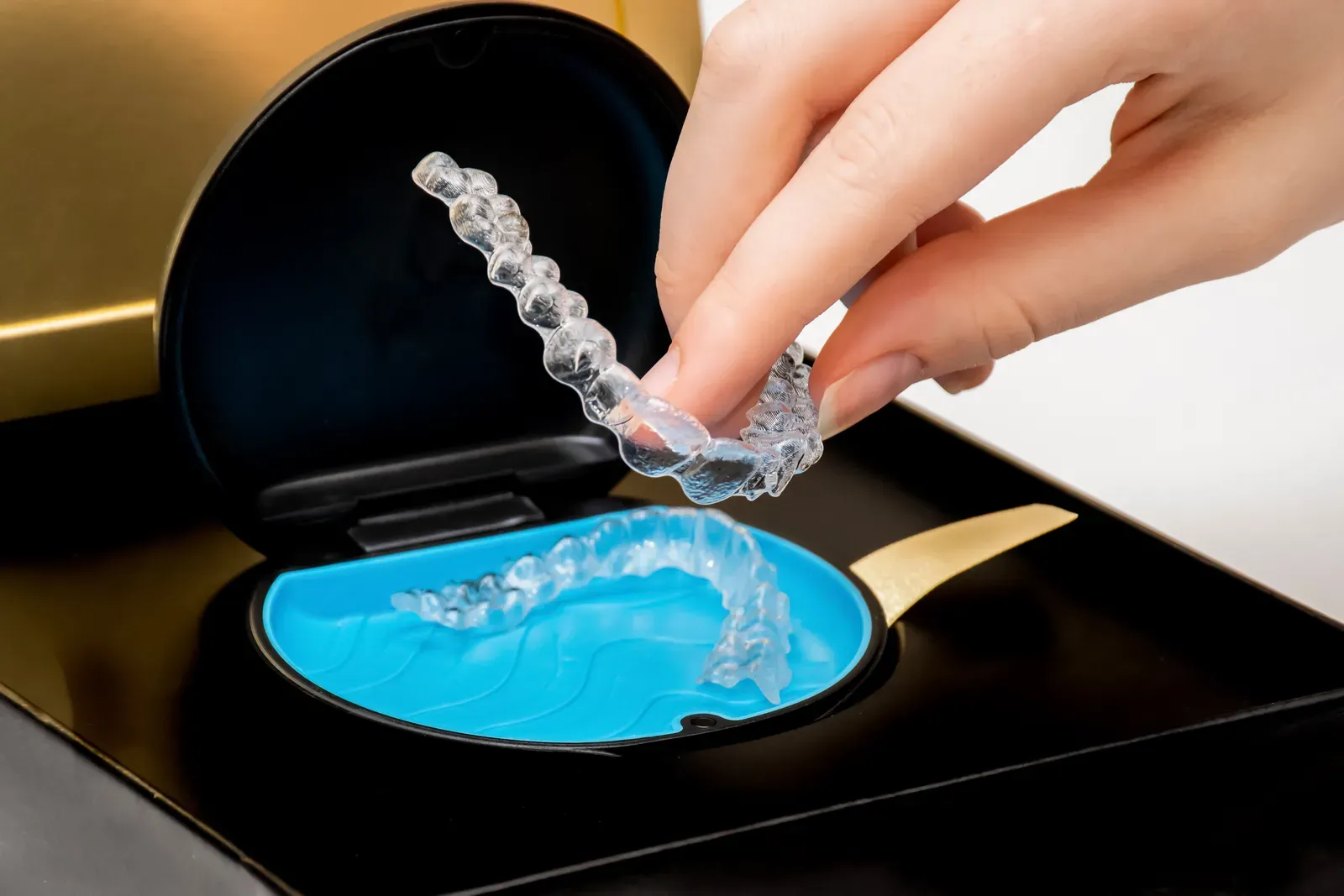
Crowded, gapped, or shifting teeth affect more than appearance. Misalignment changes how your bite comes together, which can lead to uneven wear on enamel, jaw strain, and areas that are harder to clean effectively with a toothbrush and floss. Many of our Cinco Ranch patients come to us after years of putting off orthodontic treatment because they did not want a mouth full of metal brackets and wires as adults.
Invisalign solves that problem with a series of custom-made, clear plastic aligners that gradually guide your teeth into proper position. Each set is worn for one to two weeks before you move to the next in the sequence, and the process is monitored closely by our team to keep your treatment on track. Because the aligners are removable, you keep eating the foods you enjoy and brushing and flossing normally throughout treatment.
Our approach starts with a full clinical evaluation of your bite, jaw alignment, and tooth positioning using digital scanning technology. We do not hand you a generic treatment plan. Every aligner sequence is mapped specifically to your mouth, so the results you see match what we projected at your consultation, not a rough estimate.
Orthodontic needs show up differently from one person to the next. Some patients notice cosmetic concerns first, while others experience functional issues like jaw discomfort or difficulty cleaning between teeth. Here are some of the most common reasons Cinco Ranch patients schedule an Invisalign consultation with our team.
Not every case of misalignment is suited to clear aligners, and some more complex bite issues need a different orthodontic approach entirely. A thorough evaluation with digital imaging is the only reliable way to confirm Invisalign will deliver the results you're hoping for, which is why we never skip this step before starting treatment.
Crooked or misaligned teeth rarely come from a single cause. Most patients we see have two or three contributing factors working together over time, which is why a generalized approach to straightening rarely produces lasting results.
Many patients simply inherit a jaw that is too small to comfortably hold all of their teeth, which forces them to shift and overlap as they come in.
When a baby tooth or adult tooth is lost too early, neighboring teeth drift into the open space, throwing off the whole alignment pattern.
Prolonged thumb sucking, pacifier use, or tongue thrusting during childhood development can gradually push teeth out of their natural position.
Teeth that were straightened years ago can slowly drift back toward their original position without a nightly retainer to hold them in place.
Teeth continue to shift subtly throughout adulthood as supporting bone and gum tissue change, which is why mild crowding often appears later in life.
Chronic nighttime grinding places uneven force on teeth, which can accelerate shifting and wear down enamel on specific teeth faster than others.
Every Invisalign case we treat follows a clear, methodical path. Here is what to expect from the moment you walk through our door to the day you see your finished results.
We start by listening to your concerns and goals, whether that's closing a gap, fixing crowding, or correcting a bite issue you've lived with for years.
Digital scans, photographs, and bite analysis give us a complete picture of your tooth positioning, jaw alignment, and candidacy for aligner treatment.
We map out your exact tooth movements digitally so you can preview how your smile will change before a single aligner is ever manufactured.
You'll switch to a new set of aligners roughly every one to two weeks, with periodic check-in visits so we can confirm your teeth are tracking as planned.
Once treatment is complete, we fit you for a retainer to protect your results and schedule follow-up visits to make sure your smile stays exactly where it should.
Invisalign treatment is about far more than cosmetics. Straightening your teeth corrects the underlying mechanics of your bite, which carries benefits that show up in your comfort, your confidence, and your long-term dental health.
Straighter teeth with even spacing are simply easier to brush and floss thoroughly, which lowers your risk of cavities and gum disease over time.
Correcting crowding, gaps, or bite misalignment distributes chewing force evenly across your teeth, reducing premature wear on enamel.
Many patients notice less jaw clicking or tightness once their bite aligns properly, since the jaw muscles no longer compensate for crooked teeth.
A smile you feel good about affects how comfortable you are in photos, conversations, and everyday social situations, which patients consistently tell us matters as much as the clinical outcome.
Invisalign works by applying gentle, continuous pressure to specific teeth so they move gradually into their new position. That movement only happens on schedule if the aligners stay in your mouth for the recommended 20 to 22 hours per day. When patients remove their aligners too often, whether for snacking throughout the day or forgetting to put them back in after a meal, the teeth don't receive the steady force needed to progress through the treatment plan.
Inconsistent wear doesn't just slow things down; it can cause the current aligner to no longer fit properly over teeth that haven't moved as expected. That often means extra appointments to generate a new set of aligners, which extends your overall treatment timeline beyond the original estimate.
This is why we spend real time during your fitting appointments reviewing a wear schedule that fits realistically into your routine, whether that's work, school, or family life in Cinco Ranch. Small adjustments to habits, like keeping your aligners in during coffee breaks or removing them only for meals, make a measurable difference in how closely your treatment tracks to plan.
A few consistent habits between your visits make a real difference in how smoothly your Invisalign treatment progresses and how your teeth look once treatment wraps up.
Rinse and gently brush your aligners every day to prevent buildup, odor, and discoloration that can affect how discreet they look.
Always take aligners out before meals and snacks to avoid cracking the plastic or trapping food particles against your teeth.
Brush your teeth after eating and before putting aligners back in, so food debris and bacteria aren't sealed against your enamel all day.
Always keep removed aligners in their case rather than a napkin or pocket, which prevents loss, damage, or accidental disposal.
Use a simple reminder app or timer to confirm you're hitting the recommended 20 to 22 hours of daily wear consistently.
Attend every scheduled progress appointment so we can catch and correct any tracking issues early, before they delay your results.
These habits support the plan we've built for you, but they aren't a substitute for professional monitoring. Regular check-ins let us verify your teeth are moving as expected and make small adjustments before minor issues become bigger delays.
"We know adult patients are often more self-conscious about seeking orthodontic treatment than they expect to be. Our goal is to make the entire Invisalign process feel straightforward, comfortable, and genuinely tailored to your life, not a one-size-fits-all plan."
Straightforward answers to the questions we hear most often from patients in Cinco Ranch considering Invisalign treatment.
Schedule your visit today and experience boutique, personalized dental care designed around you.

 6940 Katy-Gaston Rd Ste 200, Katy, TX 77494
 (281) 271-5100
